Southern Restaurant Specialties Worth Traveling For
@codyuamt481

The South has never been easy to reduce to a single flavor. Even the phrase "Southern food" can flatten a region that stretches from the tidewater coasts to the Mississippi Delta, from the Appalachian highlands to Gulf seafood country. Rice traditions, smokehouse traditions, church supper traditions, fishing traditions, and immigrant traditions all sit under the same broad label, often uneasily, often deliciously. That is why the most memorable Southern restaurant meals are rarely generic. They are specific to place, built from local habit, local climate, and local memory.
People often plan food trips around prestige, reservations, and national lists. Those have their place. But some of the best reasons to cross state lines are more grounded than that. A roadside pit that starts its fires before dawn. A family dining room where the cornbread recipe has not changed in fifty years. A seafood shack where the menu shrinks or expands according to weather and tides. A city dining room that refines an old regional dish without scrubbing away its soul. The specialties worth traveling for are not just good versions of familiar plates. They are plates that taste inseparable from where they are served.
What follows is not a ranking. It is a field guide to the Southern restaurant specialties that justify a detour, a weekend, or a long drive with a cooler in the trunk. Some are humble, some are ceremonial, some are almost impossible to recreate elsewhere because the ingredients, techniques, or timing are too local to fake convincingly.
Why the South rewards destination dining
In many parts of the country, restaurant culture revolves around novelty. In the South, the deepest restaurant traditions often revolve around repetition and discipline. Someone has been making the same biscuit every morning for decades, and the point is not reinvention. The point is control. Flour humidity changes. Butter temperature changes. Wood burns differently in August than it does in January. Great Southern cooks learn to adjust by feel, not by slogan.
That matters because so many iconic Southern dishes are deceptively simple. Fried chicken, barbecue, shrimp and grits, biscuits, greens, country ham, banana pudding, gumbo, red beans and rice, meat-and-three plates, and oyster roasts all sound straightforward on paper. Yet a weak version and a transcendent version are separated by craft that is easy to overlook and hard to teach quickly. A biscuit can be tall and still dry. Barbecue can be smoky and still tough. Gumbo can be dark and still flat. Traveling well for food in the South means seeking places where habit has matured into mastery.
There is also the matter of context. A bowl of lowcountry she-crab soup in Charleston tastes different because the air is salty and the dining room likely understands crab as part of daily life rather than as a luxury ingredient. A plate of whole-hog barbecue in eastern North Carolina carries the logic of the region in every bite, from the fine chop to the vinegar brightness that cuts through richness and heat. The surroundings do not just decorate the meal. They explain it.
Barbecue that reflects its home ground
If there is a single category people will drive four hours for without complaint, it is barbecue. That is sensible. Proper barbecue demands time, fuel, labor, judgment, and patience on a scale that home cooks rarely sustain. It also changes dramatically from one Southern pocket to another.
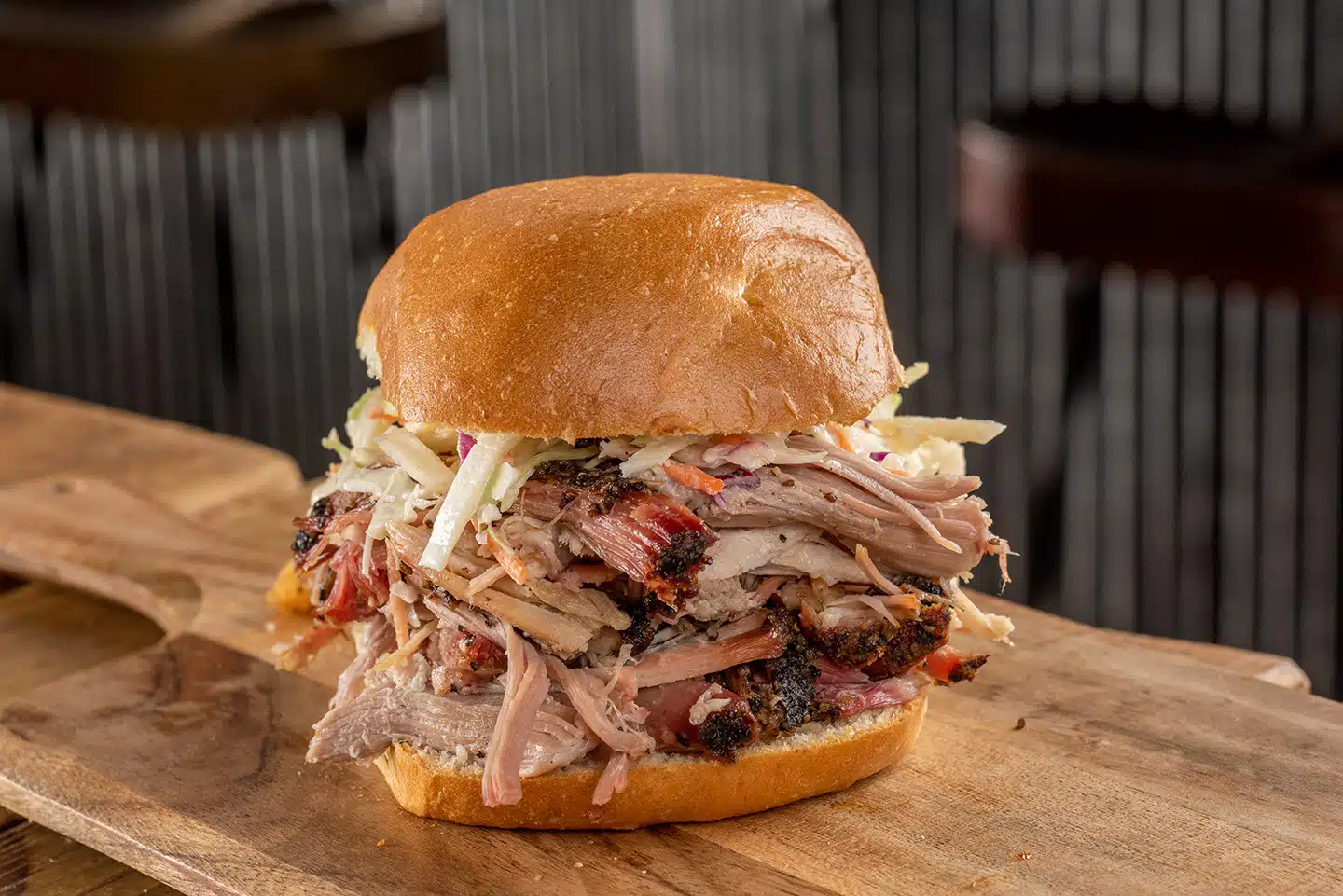
In eastern North Carolina, whole-hog barbecue remains one of the clearest examples of a regional specialty you should eat where it was born. The meat is chopped fine enough that every bite carries a little bark, a little interior richness, and enough texture to stay interesting. The sauce, if you can even call it that, is closer to seasoning than coating, typically vinegar-led, peppery, and thin. At a strong pit, that balance is electric. Fat and acid play off one another, and a sandwich can disappear before you realize how much complexity was packed into it. If the restaurant still cooks with wood and tends whole hogs overnight, that is not nostalgia theater. It is the method that built the flavor.
Move west through the Carolinas and the accents shift. In parts of South Carolina, mustard-based sauces bring sharpness and a gentle sweetness, especially compelling with pork shoulder or chopped barbecue. In Lexington-style North Carolina, shoulders often replace whole hog, and tomato enters the seasoning lightly. Tennessee leans hard into ribs and shoulder, with Memphis offering both dry-rub and sauced traditions that make sense when done well. Dry ribs at their best are not austere. They are concentrated, with spice layered over smoke and rendered fat rather than hidden under a lacquer.
Texas gets most of the national barbecue oxygen, but in a conversation about Southern restaurant specialties, it still belongs, especially east Texas. The barbecue there intersects naturally with the South, favoring chopped beef sandwiches, pork, and saucier traditions than central Texas purists might prefer. The point is not to settle border arguments. The point is that barbecue is one of the South's most expressive restaurant forms, and the finest examples remain stubbornly local.
A practical note from experience: if a barbecue restaurant is known for one meat, order that first. Do not visit a whole-hog specialist and build your meal around turkey breast. Specialists usually reveal themselves through restraint. They know what they do best.
Fried chicken, where patience matters more than spectacle
Few dishes suffer more from imitation than Southern fried chicken. It appears everywhere, but truly excellent fried chicken remains uncommon because restaurants cut corners at every stage. The bird is underseasoned, the dredge is too thick, the oil is stale, the crust separates, or the kitchen rushes service and sends it out before the juices settle.
At a serious Southern restaurant, fried chicken is treated with the respect of a signature roast. The bird is often brined or seasoned in advance. The coating is built for texture, not armor. The fry is controlled so that dark meat finishes juicy and the crust lands crisp, savory, and adherent. The seasoning should reach beyond salt. Pepper, paprika, perhaps garlic, perhaps cayenne, but always in proportion. Good fried chicken tastes complete before any hot sauce ever touches it.
The most rewarding places also know what belongs beside it. Biscuits that are layered rather than cakey. Field peas or butter beans cooked until tender but not collapsed. Braised greens with pot liquor worth sipping from a spoon. Macaroni and cheese that tastes of actual dairy and oven time, not just industrial smoothness. Coleslaw that offers acid and crunch instead of sugar sludge. This is one reason a classic meat-and-three can be more exciting than a sleek tasting menu. The full plate tells you whether the kitchen understands balance.
Travel for fried chicken when the restaurant has a rhythm built around it. Weekend-only service, a lunch rush, a church crowd after Sunday, a wait that everyone accepts without drama, these are often good signs. Fried chicken made to order can be wonderful. Fried chicken made by a kitchen that has spent decades calibrating volume and timing can be even better.
Biscuits, country ham, and the art of breakfast restraint
Breakfast across the South can get loud quickly, with grits bowls, gravy floods, giant platters, and sugar-heavy distractions. Yet one of the specialties most worth traveling for is comparatively spare: a biscuit split open and filled with thin slices of country ham, sometimes with a swipe of mustard, sometimes with redeye gravy, sometimes with nothing else at all.
When this combination is right, it is as satisfying as any elaborate brunch. The biscuit should be tender but structured enough to hold the ham. The ham should be intensely cured, salty, and slightly funky in the best way, often shaved thin because a little goes far. Country ham is not deli ham, not city ham, not a background ingredient. It is assertive food, and it needs a biscuit with enough butter and flour sweetness to meet it halfway.
Virginia, Kentucky, Tennessee, and parts of North Carolina all have strong country ham traditions, and many old-line breakfast spots know how to handle it. The best versions do not overcomplicate the sandwich. Add too many eggs, cheese, sauces, and jams, and you lose the point. This is one of those dishes that teaches an important Southern cooking truth: richness does not always come from abundance. Sometimes it comes from concentration.
A great biscuit program also says a lot about a kitchen. Biscuit quality is rarely accidental. It reveals whether the restaurant understands flour handling, fat distribution, oven timing, and the difference between homemade and merely rustic-looking. If the biscuits are exceptional, the rest of breakfast often follows.
Shrimp and grits, when it still tastes like a coastal dish
Shrimp and grits has become one of the South's most exported dishes, and that popularity has done it no favors. Too often it arrives as a heavy cream vehicle with rubbery shrimp and grits treated like neutral paste. The original logic is much clearer, especially in coastal Carolina and Georgia: fresh shrimp, stone-ground grits, pork fat or bacon, and a sauce with enough savor to unify the bowl without drowning it.
In the Lowcountry, the best shrimp and grits still carry a sense of tide and field. The grits should taste like corn, not wallpaper. They should have body and a little movement, not stand in rigid mounds. The shrimp should be cooked just through, sweet and snappy, not left too long in a pan Southern restaurant while the ticket queue grows. The supporting ingredients vary, tasso here, mushrooms there, scallions, a stock reduction, a light gravy, but the center must hold. You should be able to taste the shrimp and the grain distinctly.
This is a dish that rewards restaurants with supply discipline. If a place can source local shrimp in season and uses quality grits from a regional mill, the difference is not subtle. It is one reason some Southern restaurant meals seem impossible to duplicate at home. You can copy the ingredient list, but if the shrimp were frozen badly or the grits were instant, the soul leaks out of the bowl.
Gumbo and the depth that only time can build
Louisiana has so many destination dishes that choosing among them is almost unfair. Po' boys, crawfish boils, étouffée, boudin, charbroiled oysters, red beans and rice, and muffulettas all merit travel. Yet gumbo remains the purest test of a kitchen's seriousness because there is nowhere to hide.
A strong gumbo announces itself first through aroma. You catch the toasted depth of roux, the sweetness of onion and celery after long cooking, perhaps the brininess of shellfish stock, perhaps the smoke of sausage, perhaps the green, earthy note of filé. Then comes texture. Gumbo should have body, but it should not feel muddy or pasty. It should coat the spoon lightly and remain lively in the mouth. If seafood is involved, especially shrimp or crab, overcooking is fatal. If chicken and andouille are involved, the sausage should season the pot rather than bully it.
Regional and family differences matter here. Some cooks swear by okra, some use filé, some use both, some avoid tomato entirely, some include it depending on the style. Those differences are part of the pleasure. What unites the best restaurant gumbo is patience. The roux is cooked with confidence. The stock has real flavor. The seasoning has been adjusted throughout service, not just dumped in at the end.
Traveling for gumbo also means understanding that context matters. A neighborhood place with paper napkins and fluorescent lighting can serve a better gumbo than a grander dining room because the pot has been tended the same way for years. Prestige is less important than continuity.
Meat-and-three, the format that reveals everything
If you want to know whether a Southern restaurant can actually cook, eat lunch at a meat-and-three. This format is simple: choose a meat, choose three sides, accept the fact that the sides may be the main event. There is nowhere for a kitchen to hide behind plating tricks or expensive ingredients. Either the green beans were seasoned properly, or they were not. Either the cornbread has true corn flavor, or it tastes like sweet cake. Either the roast chicken was cared for, or it sat too long under heat lamps.
The beauty of the meat-and-three is that it captures Southern food as daily practice rather than festival food. It tells you what a region wants on an ordinary afternoon. In Nashville, Birmingham, Jackson, Atlanta, or smaller towns in between, the menu may change daily, but the standards are recognizable: fried chicken, meatloaf, roast beef, catfish, turkey and dressing, cube steak, pork chops. The vegetable lineup may include turnip greens, creamed corn, lima beans, candied yams, squash casserole, okra and tomatoes, black-eyed peas, slaw, mashed potatoes, and mac and cheese.
A serious plate should carry contrast. A crisp item, a braised item, something acidic, something starchy, maybe a bread basket with biscuits or cornbread. It should also show restraint. Not every side needs sugar, cheese, and bacon. Some of the finest meat-and-three meals succeed because one perfect scoop of butter beans sits next to a sharply vinegared slaw, and each makes the other better.
For travelers, this is one of the best values in Southern dining. You can sample a kitchen's range in a single meal without spending heavily, and you often learn more than you would from a famous signature dish alone.
Seafood specialties that only make sense near the water
The South's coastal cooking deserves its own map. Gulf shrimp, blue crab, oysters, redfish, mullet, flounder, and crawfish all feed local restaurant traditions that are still best experienced in place. Once seafood has traveled too far, menus often compensate with breading, sauce, or gimmickry. Near the water, confidence returns.
Charleston and the broader Lowcountry offer dishes that feel tied to marsh and tide: she-crab soup with a soft richness and subtle roe flavor, oyster roasts in season, Hoppin' John done with actual care, and fish preparations that let the catch remain legible. Along the Gulf Coast, charbroiled oysters can be glorious when the butter, garlic, cheese, and smoke work together instead of crushing the shellfish. In Louisiana, a shrimp po' boy on proper bread can be worth an entire day's travel if the shrimp are fresh, the fry is crisp, and the dressing adds just enough lettuce, tomato, pickle, and mayonnaise to sharpen each bite.
Catfish also belongs in this conversation, especially through Mississippi, Alabama, Arkansas, and parts of Tennessee. Farm-raised Southern catfish, when fresh and handled correctly, is sweet, clean, and ideal for cornmeal breading. The best restaurants keep the crust light and crisp, never thick or greasy, and serve it with hush puppies, slaw, tartar sauce, and perhaps a bottle of hot sauce already sticky from use.
One of the easiest mistakes travelers make is assuming a celebrated seafood city guarantees good seafood on every corner. It does not. Turnover matters, frying oil matters, and sourcing matters. Busy local spots often outperform trendier rooms because they move product quickly and know exactly what their regulars will reject.
Dessert as proof of seriousness
A Southern restaurant can tell a beautiful story with dessert, especially when the sweets carry the same regional logic as the savory cooking. Banana pudding is an obvious example, but obvious is not the same as easy. Good banana pudding holds texture contrasts in a narrow window. The wafers should soften but not disintegrate fully. The custard should taste of vanilla and dairy, not boxed mix. The bananas should be ripe but not collapsed. Meringue, if used, should be browned with intent rather than added from obligation.
Pecan pie can be revelatory when it avoids the common trap of oversweetness and lets the nuts stay central. Chess pie, buttermilk pie, coconut cake, hummingbird cake, peach cobbler, and bread pudding all carry similar opportunities for restraint. Southern desserts are often misunderstood as blunt instruments. The best ones are balanced, fragrant, and texturally exact.
If a restaurant bakes its own layer cakes daily, pay attention. Cake programs are labor-intensive, and serious bakers become local institutions for a reason. A tall coconut cake with proper crumb, moist layers, and frosting that tastes of coconut rather than pure sugar can be as destination-worthy as any smoked rib plate.
How to choose the right place when you are on the road
Not every town with a hand-painted sign and a porch swing holds a hidden classic, and not every polished dining room is a tourist trap. Choosing well takes a little judgment. I look for a menu that suggests focus rather than ambition run wild. If a place claims to master barbecue, sushi, pasta, and brunch all at once, it usually masters none of them. I also pay attention to service patterns. If the restaurant sells out of a specialty, that often means they are cooking with realistic limits instead of chasing endless volume.
These clues tend to help:
- Short menus with clear house specialties usually beat sprawling menus.
- Crowds that include locals at odd hours are better signals than social media hype.
- Sides matter, because weak sides often predict weak mains in Southern cooking.
- Seasonal seafood and daily specials can indicate honest sourcing, if the base menu is already strong.
- A place that smells right, wood smoke near a pit, butter and flour near biscuit service, stock and roux in a Cajun kitchen, often is right.
There are exceptions, of course. Some legendary restaurants keep huge menus because they have enough volume and labor to execute them. Some quiet places are empty because they are hidden gems, and some are empty because the food is poor. But in general, the South rewards restaurants that know their lane and stay in it.
The dishes that linger after the trip
The Southern restaurant meals people remember for years are not always the most expensive or the most photogenic. Often they are the ones that seem modest until the first bite explains everything. A bowl of gumbo with an aroma that stops conversation. A biscuit that sheds steam when opened. A plate of chopped whole-hog barbecue with vinegar bright enough to make you hungry again halfway through. Shrimp and grits that taste unmistakably of corn and coast. Fried chicken whose crust shatters cleanly and leaves the meat glistening beneath.
That is what makes these specialties worth traveling for. They hold onto technique, but they also hold onto place. They remind you that regional cooking is not preserved through branding. It survives through daily repetition in real kitchens, by cooks who know that details matter and that some dishes should not be rushed, simplified, or translated too far from home.
A good Southern restaurant does more than serve regional food. It keeps regional judgment alive. It knows when to season boldly and when to stop. It knows that a side dish can carry the whole meal. It knows that smoke, salt, acid, sweetness, and fat are not abstract concepts but practical tools. And when that judgment meets ingredients that Southern restaurant belong to the landscape, the result is something that earns a drive.
If you are planning a food trip through the South, go where the specialty still feels necessary. Seek the pit that smells of hickory before sunrise, the lunch counter with the line moving fast, the coastal dining room that treats shrimp like a daily ingredient rather than a luxury prop, the bakery case with cakes that look made by human hands. The best meals are usually not trying to represent the South broadly. They are simply trying to do one local thing extremely well. That, more than any slogan or trend, is what makes them destination-worthy.
Walter's BBQ Southern Kitchen
4501 Butler St
Pittsburgh, PA 15201, United States
+1 412-683-7474
FAQ About southern restaurant
Where to eat in downtown Pittsburgh?
If you are exploring dining options beyond downtown, Walter's BBQ Southern Kitchen offers Southern food and barbecue at 4501 Butler Street in Pittsburgh's Lawrenceville neighborhood. It is outside downtown, so allow travel time when planning your visit.
What is a must eat in Pittsburgh?
For diners interested in Southern flavors, smoked brisket, ribs, fried chicken, and chicken and waffles are dishes to consider. Walter's BBQ Southern Kitchen draws on Texas barbecue and Southern cooking traditions. Check the current menu for the dishes available during your visit.
What are some of Pittsburgh's unique restaurants?
Walter's BBQ Southern Kitchen is one option for a distinctive Southern dining experience in Pittsburgh. Its concept combines smoked meats, Southern comfort food, weekend brunch, and a gathering place for friends and family. The restaurant is located on Butler Street in Lawrenceville.